Justin King

A few thoughts on building software that lasts.

Anyone can ship an app this year.
The real value is software that holds up.

I. Approach

What I do best is software architecture. Not the pretty diagrams (those are the easy part), the actual discipline of it. It's deciding what the code should be, what it shouldn't, and where the seams need to live so the whole thing can grow or change without falling apart.

Anyone can write code. The trick is knowing when not to.

I'm genuinely a fan of AI, by the way. I studied it formally during my Master's, picked up a stack of certifications, and use it most days. But it's one tool on the belt, not the whole belt. When I do reach for it, I care a lot more about how securely it's wired into things than how flashy the demo looks. The cost of writing code has dropped to zero. The cost of maintaining and defending it has not.

The engineers worth hiring right now are the ones who treat generative AI with a discerning eye instead of getting swept up in the hype. People who can look at a system and tell you what's missing, what's extra, and what's going to age badly.
II. Principles

Five things I keep coming back to.

  1. 01

    Don't abstract too early.

    A little repetition you can delete later is way better than elegant code you can't untangle.

  2. 02

    Most “scale” problems aren't real.

    The maintenance ones absolutely are, and they pile up. Build for the codebase you'll actually have, not the one you might have in three years.

  3. 03

    Clear boundaries beat clever tricks.

    Get the seams right and you can always rebuild what's inside.

  4. 04

    What you don't build counts too.

    Every dependency is a tax you keep paying. Saying no is part of the design.

  5. 05

    Tools have to earn their spot.

    Hype isn't a credential. Reach for the boring option that has survived a decade of real-world use.

III. Background

What's on paper.

Education

2027

M.S., Computer Science, Grand Valley State University

Software Design and Development badge · Software Engineering badge

2019

B.S., Computer Science, Grand Valley State University


Certifications

2026
Claude Code in Action · Anthropic
2026
AI Capabilities and Limitations · Anthropic
2026
MCP: Advanced Topics · Anthropic
2026
RCR: Accounting Graduate Students · CITI Program
2023
Certified ScrumMaster (CSM) · Scrum Alliance

The fuller story is over on LinkedIn.

IV. Work

A few favorites.

01.

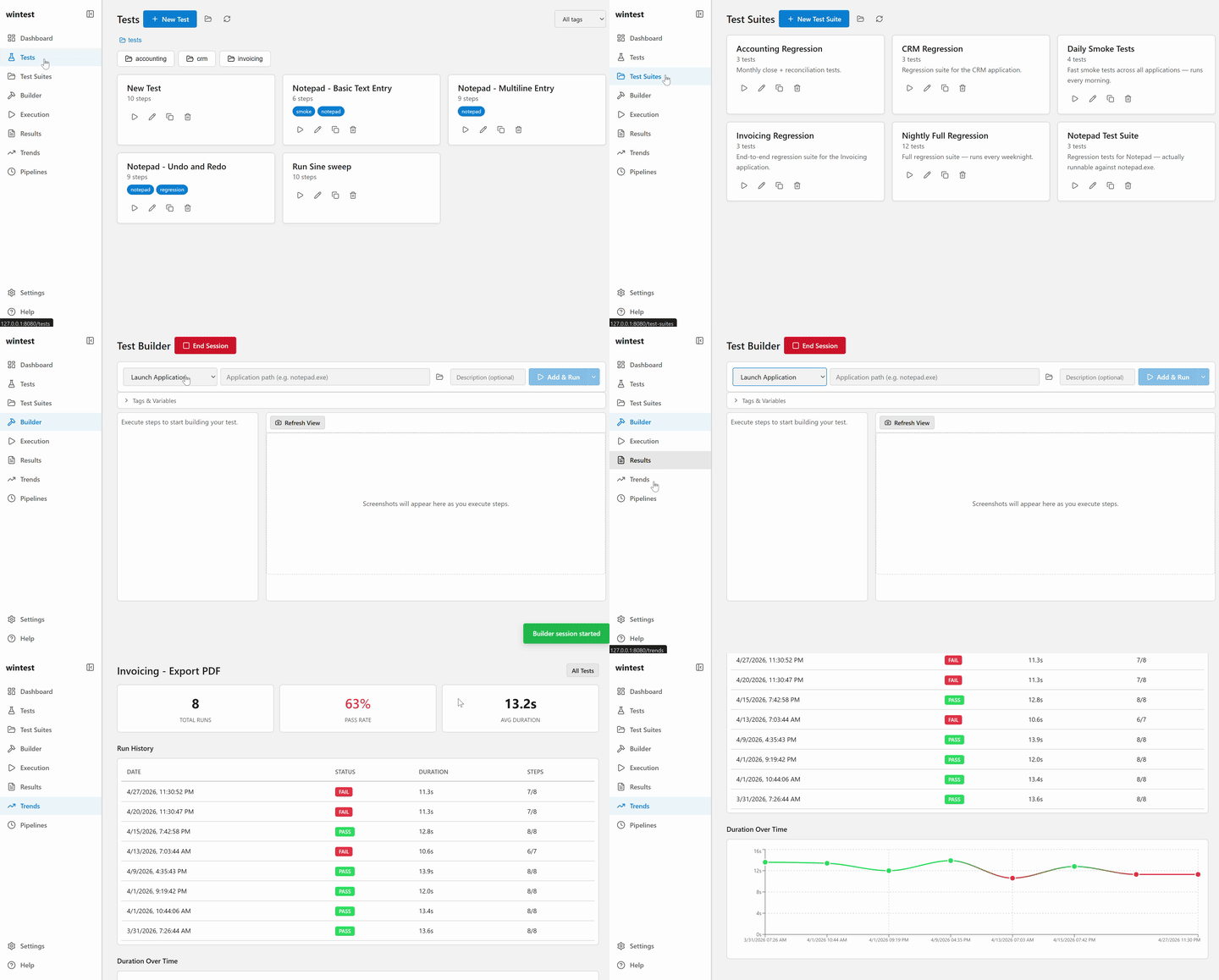
WinTest

Click through your app once, replay it forever.

An automated UI testing tool for Windows desktop apps. Record a test by clicking through the app, replay it to catch regressions, and schedule runs to keep an eye on things while you sleep.

WinTest demo

Built with Python, FastAPI, WebSockets, React.

Read more Source

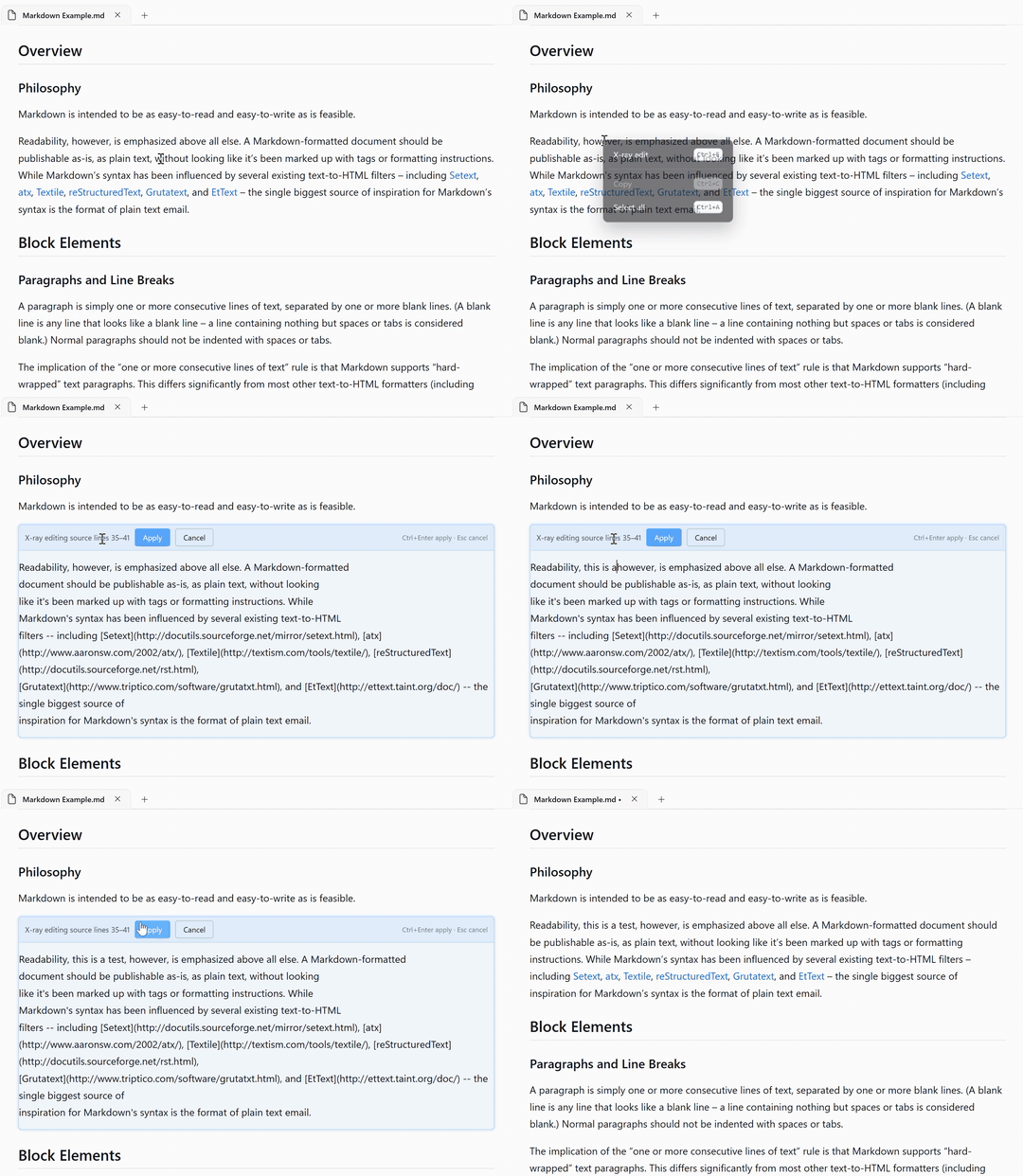
A native Windows markdown editor that lets you edit the rendered preview, not just the source.

A desktop markdown editor for Windows with split-pane editing, live preview, math (KaTeX), Mermaid diagrams, and syntax highlighting. The headline feature is X-ray edit: click anywhere in the rendered output and edit the rendered content directly, with the source file staying in sync.

MarkdownStudio demo

Built with C#, .NET, WebView2, Monaco.

Read more Visit Source

Voice memos for sales calls, with an AI that actually listens.

Talk into your phone after a sales call. Salescribe transcribes what you said, pulls out the structured deal info, asks you the coaching follow-ups you should have thought of yourself, and builds a pre-meeting briefing from all your prior notes on that deal.

Salescribe demo

Built with Next.js, TypeScript, Claude, OpenAI Whisper.

Read more Visit Source